That Chalky White Film on Your Siding: What Oxidation Actually Is
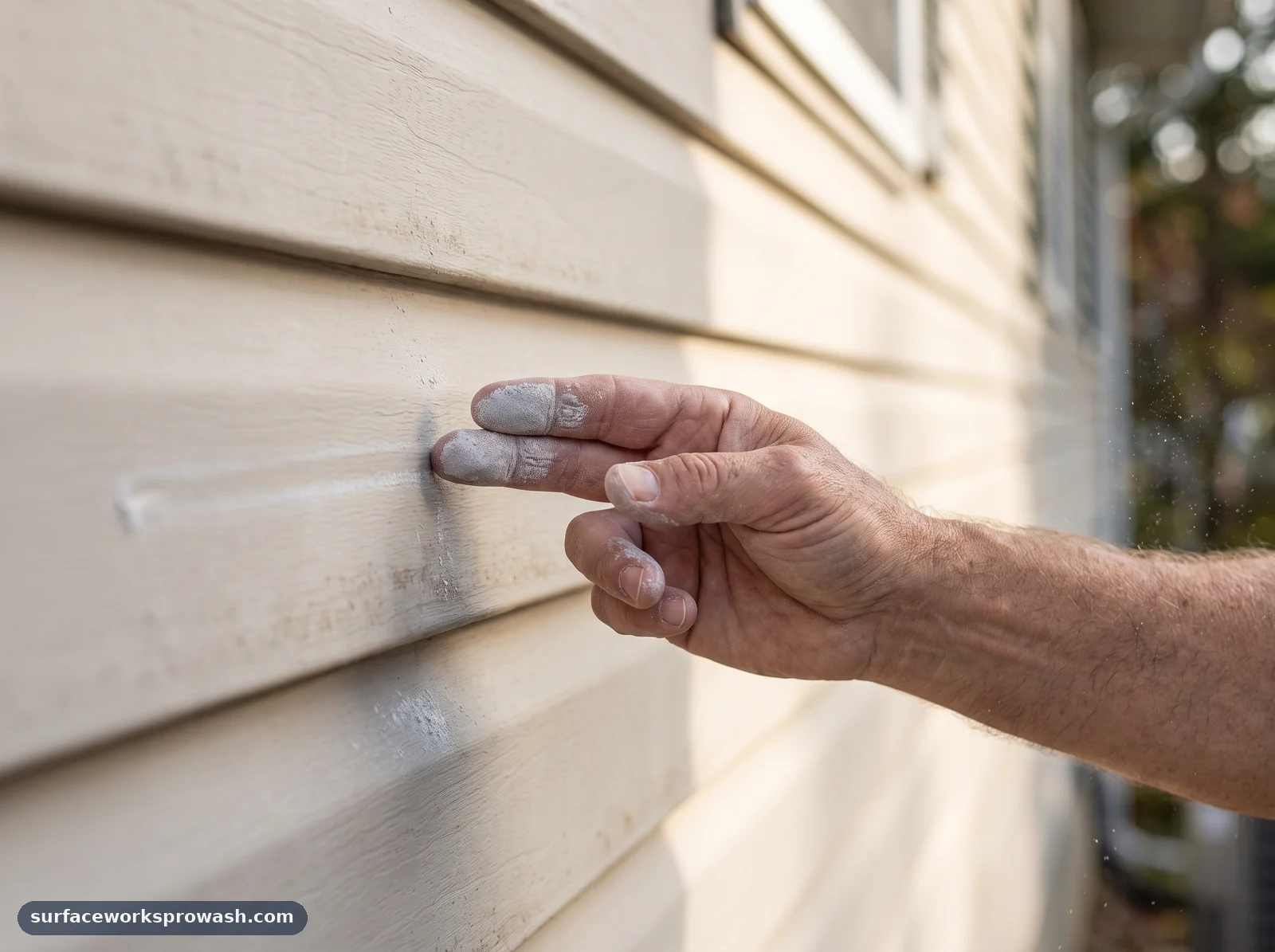
Run a hand across an older section of vinyl siding and it comes away coated in a fine white or pastel powder. Most homeowners assume that’s just dirt, and reach for a pressure washer to blast it off. It isn’t dirt, and a pressure washer is the wrong tool for it — understanding the difference is what keeps a cleaning from making the siding look worse instead of better.
4 minute read
What it is, and why it happens
Vinyl siding is a plastic (PVC) panel with color pigment and UV-resistant additives built into the material. Years of direct sun and weather slowly break down that outer surface layer, and the fine powdery film left behind — the chalk your hand picks up — is the byproduct of that breakdown. This is called oxidation, and it’s a normal, gradual part of how vinyl siding ages, not a sign that something was installed or cleaned wrong.
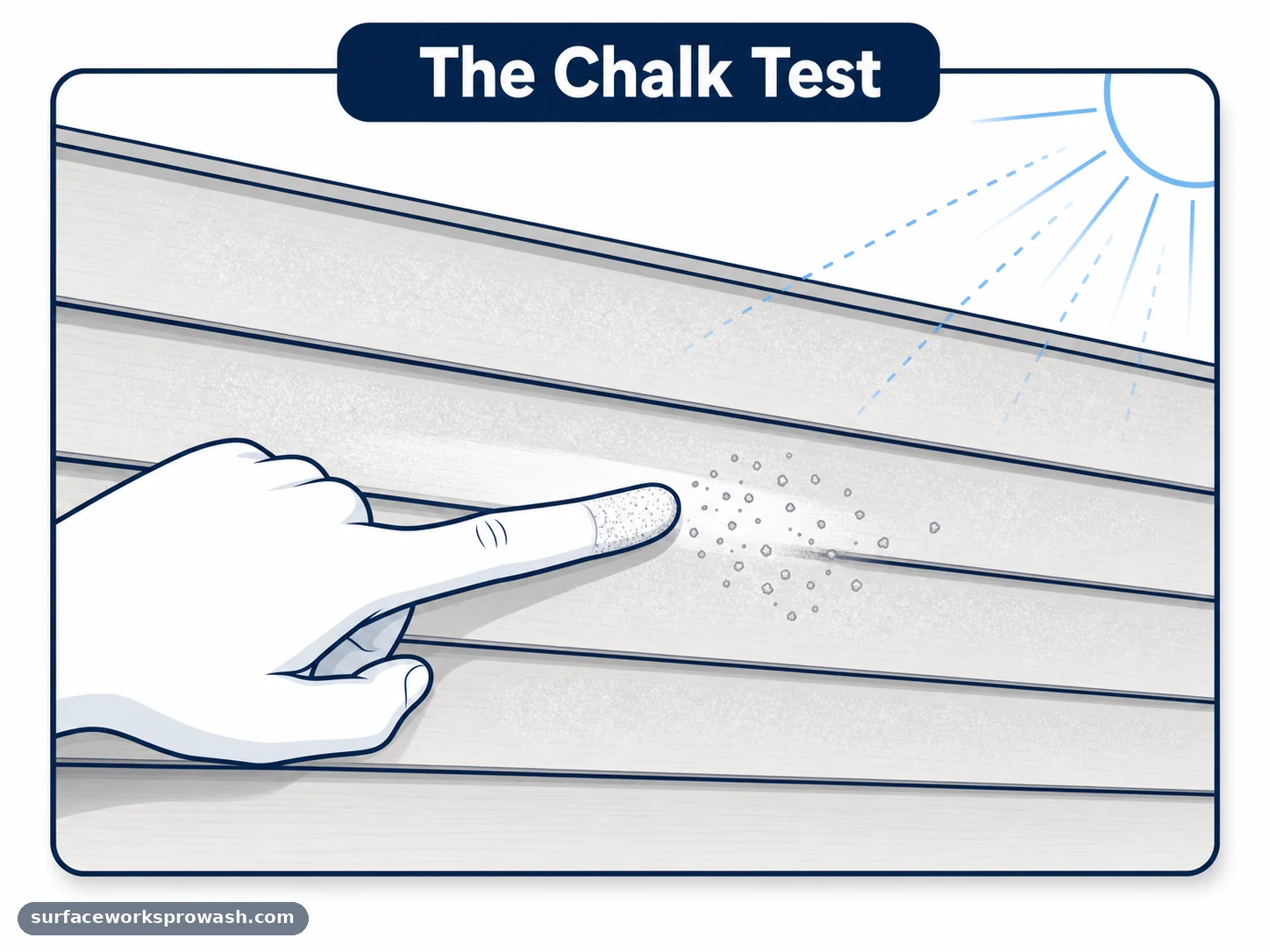
It shows up unevenly for a reason: south- and west-facing walls that take the most direct sun typically chalk first and worst, while shaded elevations on the same house can look fine for years longer. Darker-colored siding tends to show it more visibly than lighter colors, since it carries more pigment to lose. None of that means the siding underneath has failed — it means the surface finish is doing exactly what years of UV exposure eventually does to any painted or pigmented exterior material.
Why pressure washing doesn’t fix it — and can leave it looking worse
A wash, whatever the pressure, is built to remove what’s sitting on a surface — dirt, pollen, algae, general grime. Oxidation isn’t sitting on the siding; it’s the siding’s own surface layer breaking down. Force can knock loose dirt off a wall. It can’t un-degrade a surface that has already chalked.
CertainTeed, a first-party vinyl siding manufacturer, is direct about this in its own care guidance: "We do not recommend power washing vinyl or polymer siding as it can cause moisture intrusion, damage, and/or discoloration." The Polymeric Exterior Products Association (the trade association formerly known as the Vinyl Siding Institute) similarly cautions that a power washer has to be used carefully, never aimed upward into the panel laps, and that abrasive cleaning "may change the gloss of the cleaned area and cause the siding to look splotchy." On a wall that has already chalked unevenly, an aggressive wash can lift some of that loose, degraded surface film and not the rest — turning an even fade into a patchy, streaky one.
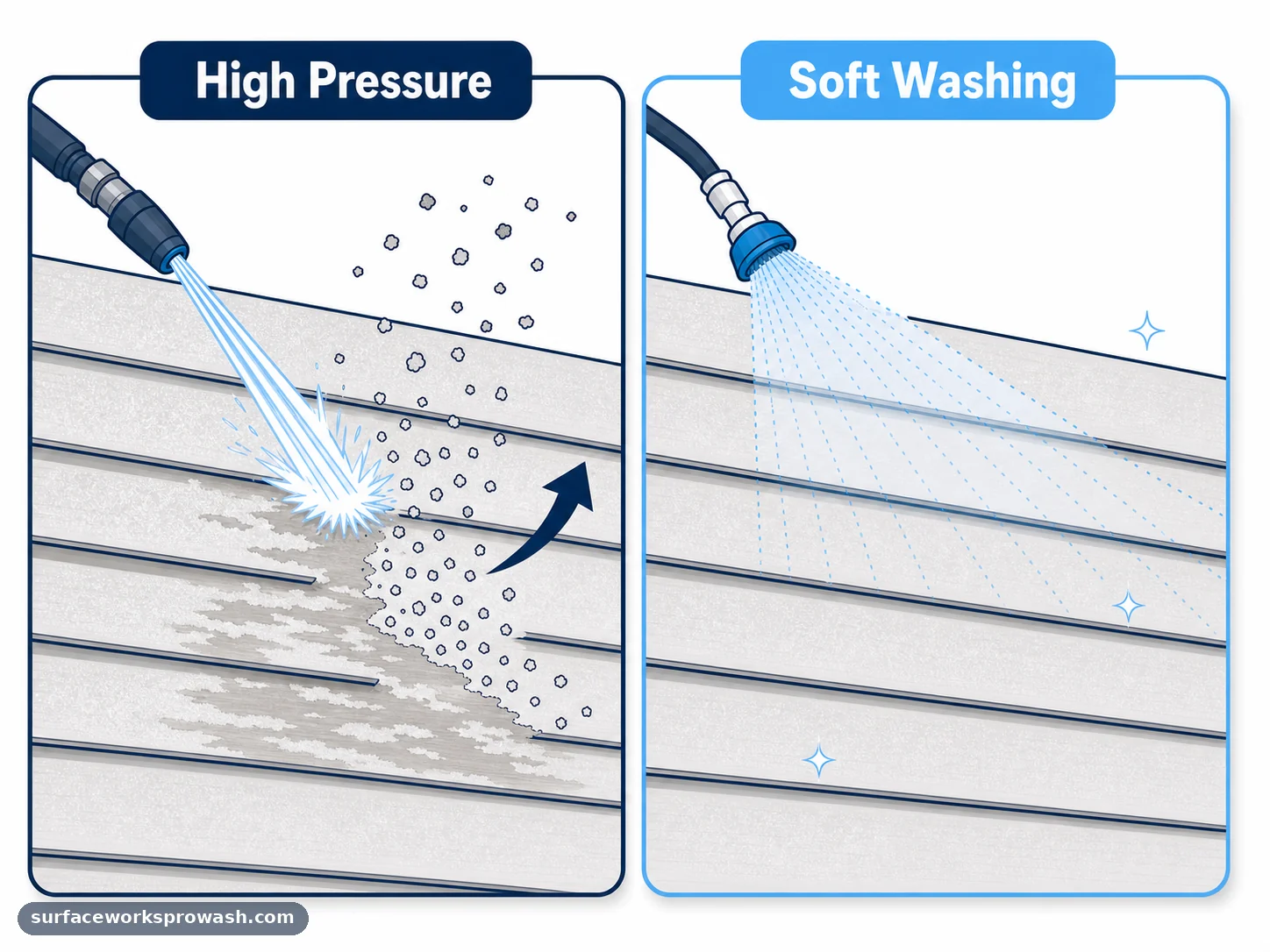
InspectApedia documents the same manufacturer guidance and adds the moisture risk that comes with it: pressure aimed upward, or held too close, can force water behind the panels and into the wall cavity rather than actually cleaning anything. So the wrong method risks two separate problems on oxidized siding — a blotchier surface, and moisture where it doesn’t belong — neither of which fixes the chalking itself.
What a correct wash does — and doesn’t do
Our standard house washing and siding cleaning process uses a controlled, surface-appropriate, low-pressure application, rinsed carefully from top to bottom without forcing water behind siding, seals, vents, or openings. On siding that has some oxidation, that standard wash cleans dirt, pollen, and organic growth evenly across the surface without deliberately stripping or aggressively disturbing the chalked layer — it’s designed not to make an existing oxidation problem look worse.
What it isn’t designed to do is remove the oxidation itself. That’s a separate, deliberate step: a dedicated oxidation-restoration treatment, applied without abrasive pressure, aimed at breaking down and lifting the chalked layer to bring color back closer to its original depth. We offer this as an optional add-on for customers who want the color restored, not as something every wash needs — plenty of customers are fine with a clean, even result that leaves normal age-related chalking as-is, and that’s a perfectly reasonable choice. If heavy chalking has reached the point of visible brittleness or cracking rather than just a powdery finish, that’s usually a sign of the siding itself aging out, which a cosmetic treatment can’t reverse.
Related Questions
What is the difference between soft washing and pressure washing?
Soft washing uses low pressure and surface-appropriate cleaning solutions for delicate materials such as many roofs and siding types. Pressure washing is generally reserved for durable hard surfaces, such as applicable concrete. SurfaceWorks ProWash selects the method based on the material, condition, and project scope.
Do you charge more for a two-story house?
No. One price covers the house at that size, whether it is one story or two. A 1,200 square foot home is $299 either way, and a 2,000 square foot home is $349 either way — you read your price off the table without doing arithmetic or wondering which column applies to you. A second story does take longer and needs more reach, and that is already built into the size-based price rather than added on top. Genuine difficulty does carry an add-on: a third story, or an elevation that cannot be worked from the ground. Anything like that is identified while the property is walked and stated before the work starts, never added afterward. You can get your own number right now: the [instant estimate](/instant-estimate) prices your property from the address in about two minutes, and what you accept is what you pay.
Why is oxidation treatment separate from the house wash?
Because a house wash is built not to strip the finish, and that is the right way round. Oxidation is the chalky film on aged vinyl and aluminum — the white powder that comes off on your hand. It is not dirt. It is pigment that has left the coating under years of sunlight; aluminum manufacturers describe their finishes as formulated to chalk in a controlled manner, releasing powdery particles of pigment over time. A wash takes the loose powder off, and manufacturers expect that — it is ordinary maintenance. What a wash cannot do is put the pigment back, so a badly chalked wall comes out genuinely clean and can still look flat and faded. The wash has done exactly what it should. What it will not do is strip the degraded layer, and that is deliberate. Pressure, stiff brushes and abrasive cleaners take that layer off along with patches of the finish — CertainTeed does not recommend power washing vinyl siding at all, and the Vinyl Siding Institute warns that stiff bristles can change the gloss and leave siding looking splotchy. Our soft wash leaves the finish alone on purpose. That is why oxidation treatment is its own service, and why it is always done after the wash: you cannot judge a finish until the dirt is off it. Once the treatment is done, its result is covered by the same guarantee as the rest of the work. Heavily degraded siding improves rather than returning to its original color, and we tell you which of the two we expect before you agree to it. Usually only the elevations that take the most sun need it at all. What the roof warranty covers, and how it compares to the five-year ones you will see online, is set out in [how to read a roof cleaning warranty](/learn/roof-cleaning-warranty-what-five-year-really-means). Roof pricing is on the [roof soft washing page](/services/roof-soft-washing). Why a wash leaves chalky siding chalky-looking, and what actually improves it, is explained in [why a wash will not bring the color back](/learn/why-a-house-wash-will-not-fix-chalky-siding).
Why does my siding have a chalky white residue on it?
That's oxidation, not dirt. Vinyl siding is made with pigment and UV-resistant additives that slowly break down under years of sun exposure, and the fine powdery film left behind is the byproduct of that breakdown. It's a normal part of how siding ages, most visible on sun-exposed and darker-colored siding, and isn't a sign of a problem with the material or a prior cleaning. Why a wash leaves chalky siding chalky-looking, and what actually improves it, is explained in [why a wash will not bring the color back](/learn/why-a-house-wash-will-not-fix-chalky-siding).
Learn More — what siding oxidation is and why pressure washing won't fix it
Will pressure washing remove that chalky residue or fix oxidized siding?
No. Washing removes dirt, pollen, and organic growth sitting on the siding, but oxidation is the siding's own surface layer breaking down, not something sitting on top of it. On siding that's already chalked unevenly, an aggressive wash can lift some of that loose surface film and not the rest, leaving it looking blotchier than before. Our standard wash uses a controlled, low-pressure approach so it cleans evenly without making existing oxidation worse. Restoring color under the chalk is a separate, optional treatment we offer on request. Why a wash leaves chalky siding chalky-looking, and what actually improves it, is explained in [why a wash will not bring the color back](/learn/why-a-house-wash-will-not-fix-chalky-siding).
Learn More — what siding oxidation is and why pressure washing won't fix it
Will soft washing damage my roof shingles or siding?
Soft washing uses low pressure and a solution matched to the material, which is why it is the recommended method for shingles, painted wood, vinyl, and other surfaces that high pressure can damage. Concentration, dwell time, and rinse approach are adjusted to the surface and its condition rather than applied the same way everywhere.
Can you wash a two-story or three-story house?
Yes. Upper stories are washed from the ground with low-pressure soft wash equipment that carries the solution up to the surface, which is safer for the house and for us than working a whole elevation off ladders. Height, roof pitch, landscaping, and access are all reviewed during the estimate because they change the plan and the time on site. A section that genuinely cannot be reached safely is identified during the estimate rather than discovered on the day — and on a three-story elevation the limiting factor is usually the ground beneath the reach point, not the height itself.
Can faded color on oxidized siding be brought back?
Often yes, as an optional treatment separate from a standard wash. A house wash removes the dirt and organic growth sitting on the siding; restoring color means treating the oxidized surface layer itself, which is a different product and a different process. How much comes back depends on how far the oxidation has progressed and how evenly the panel has chalked, and heavily degraded siding can improve without returning to its original color. We look at the siding and tell you what is realistic before you commit to it. Why a wash leaves chalky siding chalky-looking, and what actually improves it, is explained in [why a wash will not bring the color back](/learn/why-a-house-wash-will-not-fix-chalky-siding).
Learn More — what siding oxidation is and why pressure washing won't fix it
I have a single-story ranch in North Canton. What does a typical exterior cleaning cover?
On a one-story home a standard house wash covers the siding, soffit and fascia, and cleaning of the outside face of the gutters and downspouts, done as a low-pressure soft wash matched to vinyl, aluminum, or stone-veneer surfaces. Most North Canton homes we work on pair that with roof soft washing for shingle algae and with driveway or walkway cleaning, since the front approach is what shows from the street. The gutter clean-out is free with a roof soft wash and 25% off added to a house wash, and the rate is published on the [pricing page](/pricing). More on what the gutters do to a roof in [black streaks, moss and lichen](/learn/roof-moss-lichen-algae-damage).
My Alliance home is older, with painted wood trim and porch columns. Can it still be washed?
Yes — older homes with painted wood, porch columns, and mixed materials are exactly why soft washing exists, since high pressure damages aging paint and wood. We inspect paint condition, trim, glazing, and any loose or failing material first, and we tell you where washing would lift paint that is already letting go rather than doing it and handing you the result. Porches, steps, and entry concrete are commonly cleaned in the same visit as the house.
More questions answered on the full FAQ page.
References
- CertainTeed. (n.d.). https://www.certainteed.com/inspiration/how-tos/how-clean-vinyl-siding
- Polymeric Exterior Products Association (formerly Vinyl Siding Institute). (n.d.). https://polymericexteriors.org/why-polymeric/cleaning-and-maintenance/
- InspectApedia. (n.d.). https://inspectapedia.com/exterior/Vinyl-Siding-Cleaning-Methods.php